

Struggling to Stay Focused? Here’s How to Improve Concentration and Cognitive Performance
Do you often lose focus mid-task, struggle to stay engaged in conversations, or feel mentally drained after just a few hours of work? Concentration problems affect people of all ages, making it harder to retain information, complete tasks efficiently, and stay mentally sharp.
Whether due to attention disorders, mental fatigue, stress, or cognitive decline, understanding the causes of focus issues and learning effective concentration techniques can help improve attention and brain health.
This guide explores:
✅ How concentration works and why it changes with age
✅ Common attention disorders, including ADHD symptoms and cognitive decline
✅ The link between brain health, focus, and lifestyle factors
✅ Memory and concentration improvement techniques
✅ Natural solutions to enhance focus and mental clarity

How Concentration Works and Evolves with Age
Concentration involves multiple brain regions, including the prefrontal cortex and parietal lobes, which regulate attention, impulse control, and task management.
Several factors influence how well we focus:
Types of Attention and Focus :
– Sustained Attention: Staying focused over long periods (e.g., reading a book).
– Selective Attention: Filtering out distractions (e.g., focusing on a conversation in a noisy café).
–Divided Attention: Multitasking (e.g., cooking while listening to a podcast).
How Aging Impacts Focus and Cognitive Performance :
✔️ Slower Processing Speed: Reaction times may decrease with age.
✔️ Increased Susceptibility to Distractions: The brain may take longer to refocus after interruptions.
✔️ Greater Difficulty in Multitasking: Divided attention declines over time.

Types of Concentration Disorders: What’s Causing Focus Issues?
Concentration problems can stem from neurological, psychological, and lifestyle-related factors.
Common Causes of Attention Deficits :
– Attention Deficit Hyperactivity Disorder (ADHD): Marked by inattention, impulsivity, and hyperactivity.
– Cognitive Decline & Dementia: Conditions like Alzheimer’s disease impair attention and memory.
–Mental Fatigue & Chronic Stress: Excessive stress weakens focus and slows cognitive function.¹
– Sleep Disorders: Insomnia and poor sleep quality affect attention and cognitive performance.²
– Nutritional Deficiencies: Lack of iron, omega-3s, and B vitamins impacts brain health and focus.³
Identifying the root cause of concentration problems can help determine the best strategies for improving focus.
What If Concentration Problems Worsen? When to Seek Help
If focus issues start interfering with work, school, or daily life, take the following steps:
✔️Monitor Symptoms: Keep track of attention difficulties and mental fatigue.
✔️ Consult a Healthcare Provider: Early diagnosis of ADHD, cognitive decline, or memory disorders can improve outcomes.
✔️ Undergo Cognitive Testing: Neuropsychological assessments can detect attention deficits.
✔️ Adjust Lifestyle Habits: Optimize sleep, diet, and stress management to support concentration.
Cognitive decline isn’t inevitable—many focus issues can be improved with targeted brain training.

Solutions for Concentration Problems: How to Stay Focused
Improving focus requires a combination of mental exercises, lifestyle adjustments, and brain-healthy habits.
Cognitive Training and Mindfulness for Focus :
– Memory & Concentration Exercises: Play Sudoku, chess, and brain-training apps.⁴
– Mindfulness Practices: Meditation improves attention control and impulse regulation.⁵
– Structured Routines: Use planners, task lists, and timers to minimize distractions.
Break tasks into smaller segments and use the Pomodoro technique (25-minute work sprints, 5-minute breaks) to maintain focus!⁶
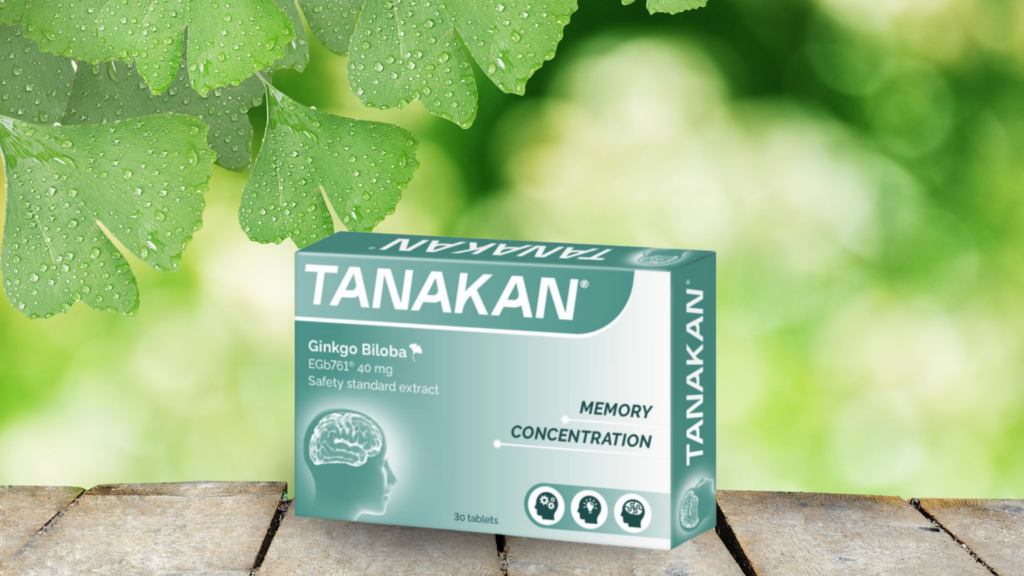
Can Drugs Help Improve Focus and Attention?
While lifestyle changes and brain exercises can significantly help memory, sometimes your brain needs additional support.
Tanakan, a scientifically formulated drug derived from Ginkgo biloba, the plant known to enhance memory⁷, concentration⁷, attention⁸, circulation⁹, tinnitus¹⁰ and vertigo¹⁰.
Frequently Asked Questions (FAQs)
1. What are the most common causes of concentration problems?
✔️ ADHD and attention disorders
✔️ Chronic stress and mental fatigue
✔️ Poor sleep quality
✔️ Nutritional deficiencies (lack of B vitamins, omega-3s, and iron)
✔️ Aging-related cognitive decline
2. How can I improve focus and attention naturally?
✔️ Engage in cognitive training (memory exercises, problem-solving tasks).⁴
✔️ Follow a brain-healthy diet rich in omega-3s and antioxidants.³
✔️ Exercise regularly to enhance blood flow to the brain.¹¹
✔️ Practice mindfulness exercises to strengthen attention control.
3. How does sleep affect concentration?²
Poor sleep leads to slower reaction times, reduced focus, and impaired decision-making. Aim for 7-9 hours of quality sleep to optimize attention.
4. What are the best foods for improving focus?³
✔️ Fatty fish (omega-3s) – Improves brain function.
✔️ Leafy greens (B vitamins) – Supports cognitive processes.
✔️ Nuts & seeds (Vitamin E, magnesium) – Reduces mental fatigue.

Ours products
Tanakan products range

Diagnostic
Take the test

The Impact of Sleep on Memory and Concentration

How to Boost Cognitive Performance Naturally

How Better Focus Improves Your Memory
1.Malmberg Gavelin, H., Stigsdotter Neely, A., Dunås, T., Eskilsson, T., Slunga Järvholm, L., & Boraxbekk, C.-J. (2020). Mental fatigue in stress-related exhaustion disorder: Structural brain correlates, clinical characteristics and relations with cognitive functioning. NeuroImage: Clinical, 27, 102337. https://doi.org/10.1016/j.nicl.2020.102337 2.Fortier-Brochu, É., Beaulieu-Bonneau, S., Ivers, H., & Morin, C. M. (2012). Insomnia and daytime cognitive performance: A meta-analysis. Sleep Medicine Reviews, 16(1), 83–94. https://pmc.ncbi.nlm.nih.gov/articles/PMC7000136/ 3.Selhub, E. M. (2015, November 16). Nutritional psychiatry: Your brain on food. Harvard Health Blog. https://www.health.harvard.edu/blog/nutritional-psychiatry-your-brain-on-food-2015111686 4.National Institute on Aging. (n.d.). Cognitive health and older adults. U.S. Department of Health and Human Services. https://www.nia.nih.gov/health/cognitive-health-and-older-adults 5.National Center for Complementary and Integrative Health. (n.d.). Meditation and mindfulness: What you need to know. U.S. Department of Health and Human Services. https://www.nccih.nih.gov/health/meditation-in-depth 6.Cleveland Clinic. (2023, February 7). What is the Pomodoro Technique and can it help you get more done? https://health.clevelandclinic.org/pomodoro-technique 7.Spiegel R et al. “Ginkgo biloba special extract EGb 761® in dementia: a systematic review and meta-analysis.” Curr Alzheimer Res. 2013;10(10):1080-92. 8.Kennedy DO et al. "Effects of Ginkgo biloba extract (EGb 761) on attention, mood, and memory in healthy volunteers." Psychopharmacology (Berl). 2000;151(2-3):416–423. 9.Rai GS et al. “Double-blind placebo-controlled study of Ginkgo biloba in geriatric patients.” Curr Med Res Opin. 1991;12(6):350–355. 10.Morgenstern C, Biermann E. “Efficacy of Ginkgo biloba special extract EGb 761® in patients with tinnitus.” Int J Clin Pharmacol Ther. 2002;40(4):188–197. 11. Harvard Health Publishing. (n.d.). Exercise can boost your memory and thinking skills. Harvard Medical School. https://www.health.harvard.edu/mind-and-mood/exercise-can-boost-your-memory-and-thinking-skills TAN-GO-001870