

Want a Sharper Mind? Try These Memory Improvement Techniques
Do you struggle to remember names, appointments, or where you put your keys? In today’s fast-paced world, memory lapses are common, but the good news is that you can train your brain to improve memory naturally.
Just like muscles, the brain thrives on mental exercises, cognitive training, and memory-boosting activities. By using scientifically proven memory improvement techniques, you can enhance recall, strengthen cognitive abilities, and maintain mental sharpness at any age.
This guide will show you:
✅ The best brain exercises for memory
✅ Memory enhancement strategies for long-term recall
✅ How to create a memory improvement diet
✅ Memory training programs to keep your brain active
✅ Sleep, stress management, and lifestyle habits that enhance memory retention

1. Learn and Engage in New Activities: Keep Your Brain Active
Your brain needs constant stimulation to stay sharp. Engaging in new and challenging activities helps form new neural connections, improving cognitive function and memory retention.¹⁻²
Best Memory-Boosting Activities
– Learn a Musical Instrument – Playing an instrument enhances memory and hand-eye coordination.
– Try Creative Hobbies – Painting, pottery, or sculpture stimulate different areas of the brain.
–Play Strategy Games – Chess, Sudoku, and puzzles train memory, logic, and problem-solving skills.
– Engage in Physical Activities – Dance and yoga combine movement with memory, strengthening recall.
– Start Learning a New Language – Studies show bilingual individuals have better cognitive flexibility and reduced risk of dementia.
Choose a new hobby that challenges your brain and keeps you engaged long-term!
2. Reinforce Learning Through Repetition: Strengthen Memory Pathways
Your brain remembers information better when it is repeated multiple times. This process, known as spaced repetition, strengthens neural connections and improves long-term recall.³⁻⁴
How to Use Repetition to Enhance Memory
✅ Repeat Out Loud – Saying information out loud reinforces learning.
✅ Write it Down – Writing notes improves information encoding in the brain.
✅ Test Yourself Regularly – Quizzing yourself boosts retention and recall.
Use flashcards or interactive learning apps to reinforce new information over time!
3. Use Mnemonics and Acronyms: Make Information Stick
Mnemonics and acronyms are powerful memory enhancement strategies that simplify complex information into easy-to-recall patterns.²
Popular Mnemonic Techniques for Better Recall
– Acronyms – To remember the colors of the rainbow (Red, Orange, Yellow, Green, Blue, Indigo, Violet), use ROYGBIV.
– Rhyming and Songs – Associating information with a melody makes it easier to recall.
– Chunking Information – Instead of remembering a phone number as 5556378299, break it into 555-637-8299.
Create personalized mnemonics to remember important details!

4. Apply the “Method of Loci” (Memory Palace Technique)
The Memory Palace technique, used by memory champions, associates information with specific locations in a familiar setting.
How to Use the Memory Palace Method
– Visualize a Familiar Place – Imagine your house, a park, or a favorite café.
– Place Information in Specific Spots – Assign facts or details to different locations.
– Mentally Walk Through the Space – Recall the information by mentally navigating through the scene.
Use this technique to memorize speeches, grocery lists, or historical facts!

5. Engage Multiple Senses: Activate More Brain Pathways
The more senses involved in learning, the stronger the memory retention. Studies show that multisensory learning significantly improves recall.⁵⁻⁷
How to Use Sensory Memory Techniques
👀 Visualize – Associate words with images or symbols.
👂 Listen – Repeat information aloud or use audiobooks.
✋ Touch – Writing notes by hand enhances memory encoding.
Engage at least two senses when learning new information for better recall!

6. Avoid Instant Internet Searches: Strengthen Recall Pathways
In today’s digital world, we often Google answers instead of recalling them. But the act of trying to remember on your own strengthens memory pathways.
Next time you forget something, pause and try to retrieve the information naturally before searching online!

7. Get Enough Sleep: Optimize Memory Consolidation
Memory consolidation happens during deep sleep. Without adequate rest, your brain struggles to store and retrieve information.⁸
How to Improve Sleep for Memory Enhancement
✅ Stick to a Sleep Schedule – Go to bed and wake up at the same time.
✅ Avoid Blue Light Before Bed – Reduce screen time before sleeping.
✅ Prioritize REM Sleep – This is when the brain organizes and strengthens memories.
Aim for 7-9 hours of quality sleep per night to improve recall!

8. Cultivate Calmness: Reduce Stress for Better Memory
High stress elevates cortisol levels, which negatively impacts the hippocampus (the brain’s memory center). Managing stress improves focus and recall.⁹⁻¹¹
Memory Training Strategies for Stress Reduction
– Practice Meditation – Meditation increases gray matter density in memory-related brain regions.
– Spend Time in Nature – Being outdoors improves mental clarity.
– Try Deep Breathing Exercises – This reduces anxiety and enhances focus.
10 minutes of daily mindfulness practice can enhance cognitive function and memory retention!

9. Stay Organized: Reduce Cognitive Load
A cluttered environment overloads the brain, making it harder to remember information.
How to Stay Organized for Better Memory
– Use Checklists – Writing down tasks reduces mental effort.
– Plan with a Calendar – Scheduling helps prevent forgetfulness.
– Create a Routine – Structuring your day minimizes cognitive overload.
Keep a notebook or digital planner for tracking important details!

10. Follow a Memory Improvement Diet: Eat for Brain Health
What you eat directly affects memory and cognitive function. A memory-boosting diet can help prevent cognitive decline.¹²⁻¹⁷
Best Foods for a Memory Improvement Diet
– Omega-3 Fatty Acids – Found in fatty fish, walnuts, and flaxseeds, these support neural function.
– Antioxidants – Berries and dark chocolate protect brain cells from oxidative stress.
– B Vitamins – Found in eggs, whole grains, and leafy greens, B vitamins enhance neurotransmitter function.
Reduce processed foods and sugar while increasing nutrient-dense foods
Can Drugs Help Improve Memory and Brain Function ?
While lifestyle changes and brain exercises can significantly help memory, sometimes your brain needs additional support.
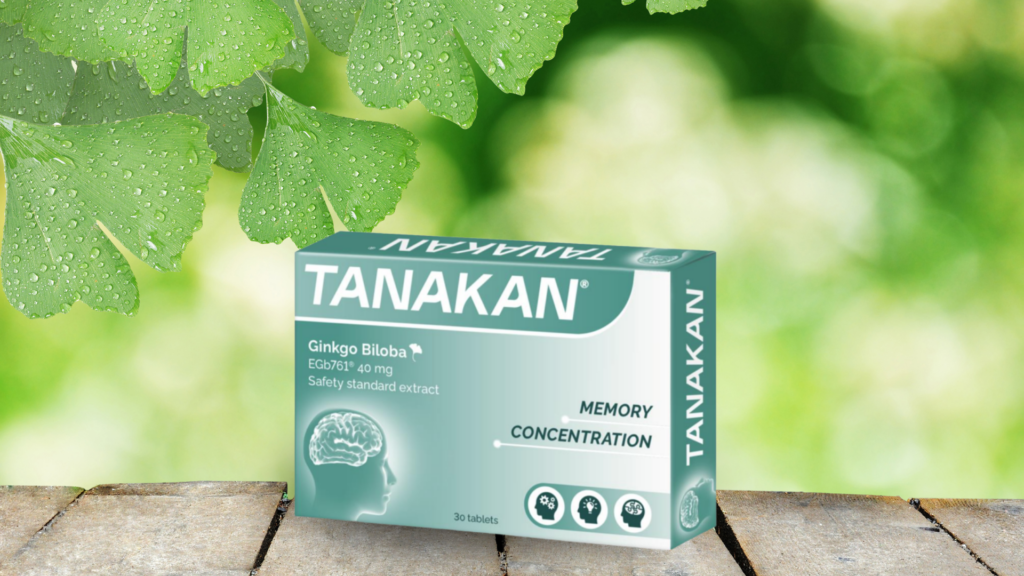
Tanakan, a scientifically formulated drug derived from Ginkgo biloba, the plant known to enhance memory, concentration, attention, circulation, tinnitus and vertigo.¹⁸⁻²¹
Frequently Asked Questions (FAQs)
1. What are the best brain exercises for memory enhancement?¹⁻²
✔️ Playing strategy games like chess, Sudoku, and memory puzzles
✔️ Learning a new language to build neural connections
✔️ Practicing creative activities like painting or playing an instrument
✔️ Using visualization techniques like the Memory Palace method
2. What are the best foods for memory improvement?¹²⁻¹⁷
✔️ Omega-3 fatty acids (found in salmon, walnuts, and flaxseeds) to support brain function
✔️ Antioxidant-rich foods (such as berries, dark chocolate, and green tea) to combat oxidative stress
✔️ B vitamins (found in whole grains, eggs, and leafy greens) to enhance neurotransmitter function
✔️ Polyphenols (from grapes, olive oil, and cocoa) to improve blood flow to the brain
3. What are some effective memory training programs?
✔️ Dual N-Back Training – Improves working memory and attention
✔️ Brain-Training Apps (like Lumosity, Elevate, or Peak) – Provide personalized cognitive exercises
✔️ Spaced Repetition Systems (SRS) – Help retain large amounts of information over time
4. Can stress impact memory retention?⁹⁻¹¹
Yes! Chronic stress increases cortisol, which can damage the hippocampus—the brain’s memory center. Practicing stress reduction techniques like deep breathing, yoga, and meditation can improve memory retention and overall brain function.
5. How does the Memory Palace technique work?
The Memory Palace method involves associating information with specific locations in a familiar space. By mentally walking through these locations, you can recall details more effectively.

Ours products
Tanakan products range

Diagnostic
Take the test

Memory Disorders: Causes and Solutions

How Better Focus Improves Your Memory
The Different Types of Memory Explained
1.National Institute on Aging. (n.d.). Cognitive health and older adults. U.S. Department of Health and Human Services. Retrieved May 30, 2025, from https://www.nia.nih.gov/health/cognitive-health-and-older-adults 2.Harvard Health Publishing. (n.d.). Train your brain. Harvard Medical School. Retrieved May 30, 2025, from https://www.health.harvard.edu/mind-and-mood/train-your-brain 3.Sisti, H. M., Glass, A. L., & Shors, T. J. (2007). Neurogenesis and the spacing effect: Learning over time enhances memory and the survival of new neurons. Learning & Memory, 14(5), 368–375. https://doi.org/10.1101/lm.488707 4.Carpenter, S. K., Cepeda, N. J., Rohrer, D., Kang, S. H. K., & Pashler, H. (2017). Using spacing to enhance diverse forms of learning: Review of recent research and implications for instruction. Frontiers in Psychology, 8, 962. https://doi.org/10.3389/fpsyg.2017.00962 5.https://www.dpag.ox.ac.uk/news/researchers-discover-why-multisensory-learning-is-beneficial-for-memory 6.Quak, M., London, R. E., & Talsma, D. (2015). A multisensory perspective of working memory. Frontiers in Human Neuroscience, 9, 197. https://doi.org/10.3389/fnhum.2015.00197 7.Pahor, A., Collins, C., Smith, R. N., Moon, A., Stavropoulos, T., Silva, I., Peng, E., Jaeggi, S. M., & Seitz, A. R. (2021). Multisensory facilitation of working memory training. Journal of Cognitive Enhancement, 5(3), 386–395. https://doi.org/10.1007/s41465-020-00196-y 8.Yale School of Medicine. (2022, May 10). Sleep’s crucial role in preserving memory. https://medicine.yale.edu/news-article/sleeps-crucial-role-in-preserving-memory/ 9.National Center for Complementary and Integrative Health. (n.d.). Meditation: In depth. U.S. Department of Health and Human Services, National Institutes of Health. https://www.nccih.nih.gov/health/meditation-in-depth 10.Weir, K. (2020, April). Nurtured by nature. Monitor on Psychology, 51(3). American Psychological Association. https://www.apa.org/monitor/2020/04/nurtured-nature 11.Harvard Health Publishing. (n.d.). Relaxation techniques: Breath control helps quell errant stress response (H. E. LeWine, Ed.). https://www.health.harvard.edu/mind-and-mood/relaxation-techniques-breath-control-helps-quell-errant-stress-response 12.Selhub, E. M. (2015, November 16). Nutritional psychiatry: Your brain on food. Harvard Health Blog. https://www.health.harvard.edu/blog/nutritional-psychiatry-your-brain-on-food-2015111686 13. Gómez-Pinilla, F. (2008). Brain foods: The effects of nutrients on brain function. Nature Reviews Neuroscience, 9(7), 568–578. https://doi.org/10.1038/nrn2421 Available at: https://www.ncbi.nlm.nih.gov/pmc/articles/PMC2805706/ 14.Dighriri, I. M., Alsubaie, A. M., Hakami, F. M., Hamithi, D. M., Alshekh, M. M., Khobrani, F. A., Dalak, F. E., Hakami, A. A., Alsueaadi, E. H., Alsaawi, L. S., Alshammari, S. F., Alqahtani, A. S., Alawi, I. A., Aljuaid, A. A., & Tawhari, M. Q. (2022). Effects of omega-3 polyunsaturated fatty acids on brain functions: A systematic review. Cureus, 14(10), e30091. https://doi.org/10.7759/cureus.30091 Available at: https://www.ncbi.nlm.nih.gov/pmc/articles/PMC9641984/ 15.Alzheimer’s Association. (n.d.). 10 healthy habits for your brain. Retrieved May 30, 2025, from https://www.alz.org/help-support/brain_health/10-healthy-habits-for-your-brain 16.National Institute on Aging. (n.d.). What do we know about diet and prevention of Alzheimer’s disease? U.S. Department of Health and Human Services. Retrieved May 30, 2025, from https://www.nia.nih.gov/health/alzheimers-and-dementia/what-do-we-know-about-diet-and-prevention-alzheimers-disease 17.Harvard T.H. Chan School of Public Health. (n.d.). Mediterranean diet. The Nutrition Source. Retrieved May 30, 2025, from https://nutritionsource.hsph.harvard.edu/healthy-weight/diet-reviews/mediterranean-diet/ 18.Spiegel R et al. “Ginkgo biloba special extract EGb 761® in dementia: a systematic review and meta-analysis.” Curr Alzheimer Res. 2013;10(10):1080-92. 19.Rai GS et al. “Double-blind placebo-controlled study of Ginkgo biloba in geriatric patients.” Curr Med Res Opin. 1991;12(6):350–355. 20.Morgenstern C, Biermann E. “Efficacy of Ginkgo biloba special extract EGb 761® in patients with tinnitus.” Int J Clin Pharmacol Ther. 2002;40(4):188–197 21.Kennedy DO et al. "Effects of Ginkgo biloba extract (EGb 761) on attention, mood, and memory in healthy volunteers." Psychopharmacology (Berl). 2000;151(2-3):416–423. TAN-GO-001870